



Industrial pad clearing
Match preparation, access and equipment to the scale and intended use of the site.
GWINNETT & HALL COUNTIES, GEORGIA
Buford sits in two counties at once, and the permit rules change depending on which side of the city a lot falls on.
LOCAL GROUND. A PLAN THAT FITS.
Most of Buford sits in Gwinnett County; the northern part is in Hall. Gwinnett requires a land disturbance permit above 5,000 square feet of disturbance, roughly a tenth of an acre. Hall County's threshold sits at a full acre.
The city's own permit checklist routes fire department review through whichever county the parcel falls in, so two lots a few streets apart inside Buford can carry genuinely different paperwork. We confirm the county line against the parcel before quoting rather than after filing.
BUILT AROUND YOUR PROPERTY
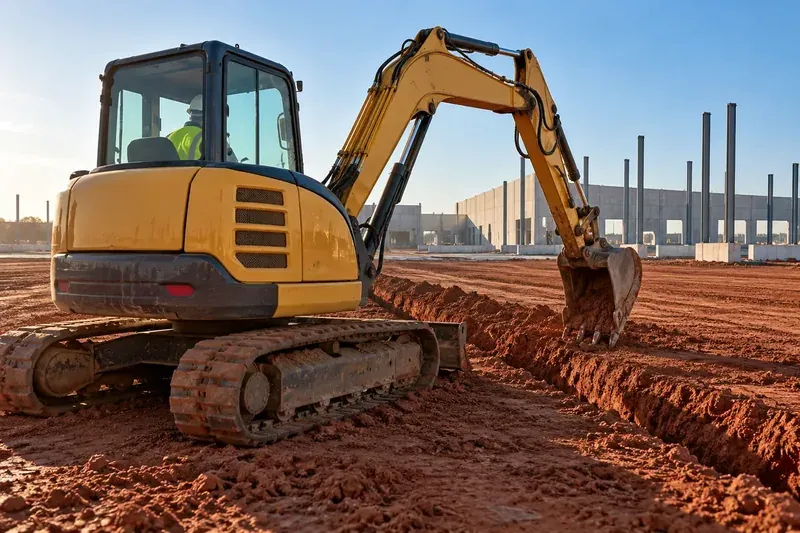
Match preparation, access and equipment to the scale and intended use of the site.

Prepare the ground and access around the approved development plan.

Confirm the jurisdiction, required approvals and site conditions before equipment arrives.

Check the property boundaries and protected areas before laying out the work.
BUILT AROUND THE CONDITIONS
Georgia's state floor on a stream buffer is 25 feet. Buford layers two more rules on top of it: a 50-foot city undisturbed buffer beyond that, then a 75-foot impervious setback beyond the 50, where impervious surface is prohibited entirely.
That's three separate lines to survey and hold on a single waterway, and getting the stacking order wrong moves a building envelope more than a single-buffer mistake would anywhere else in the territory.
BEFORE THE WORK STARTS
Buford requires 20 tree density units per acre on non-residential sites, and a Specimen Tree Survey has to exist before a clearing, grubbing or grading permit is issued. The critical root zone around a protected tree runs 1.5 feet of radius for every inch of trunk diameter, half again wider than the standard used elsewhere in the territory.
Street trees in the right-of-way sit outside the density count entirely, which catches people who assume they already have enough canopy credit.
PLAN THE WORK BEFORE IT STARTS
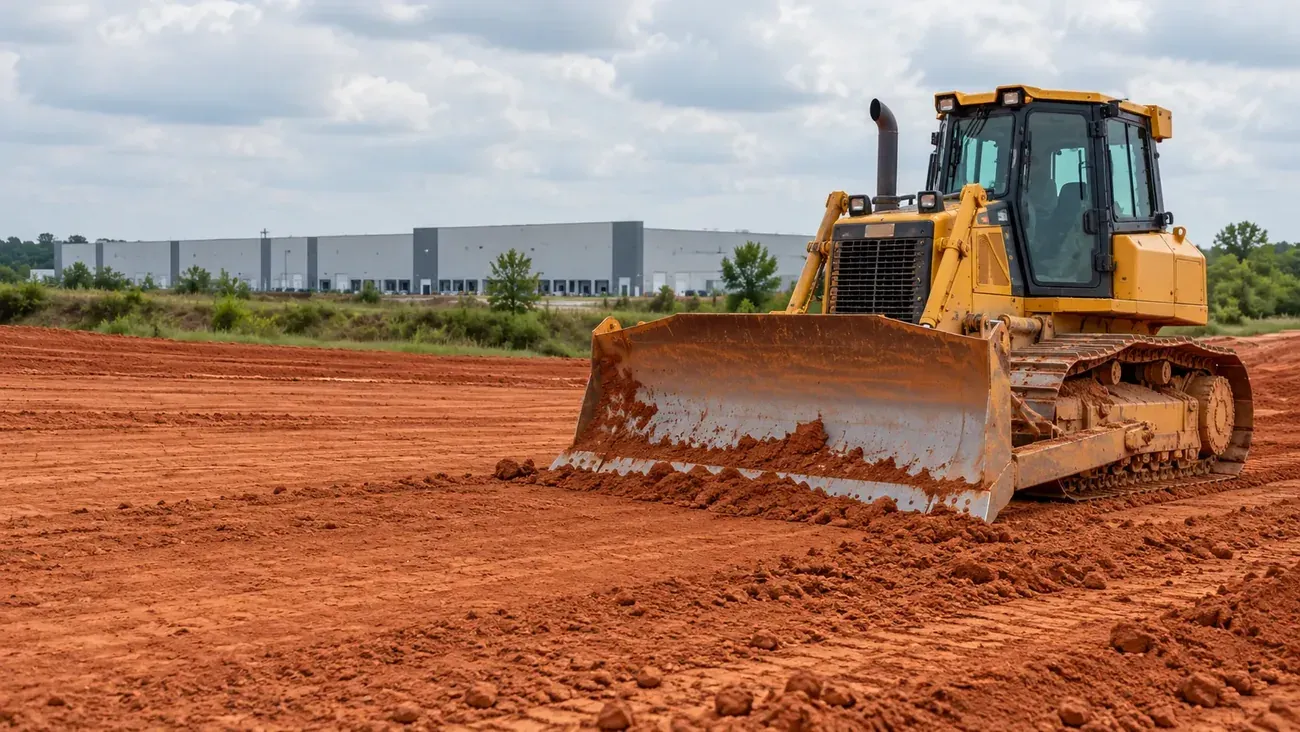
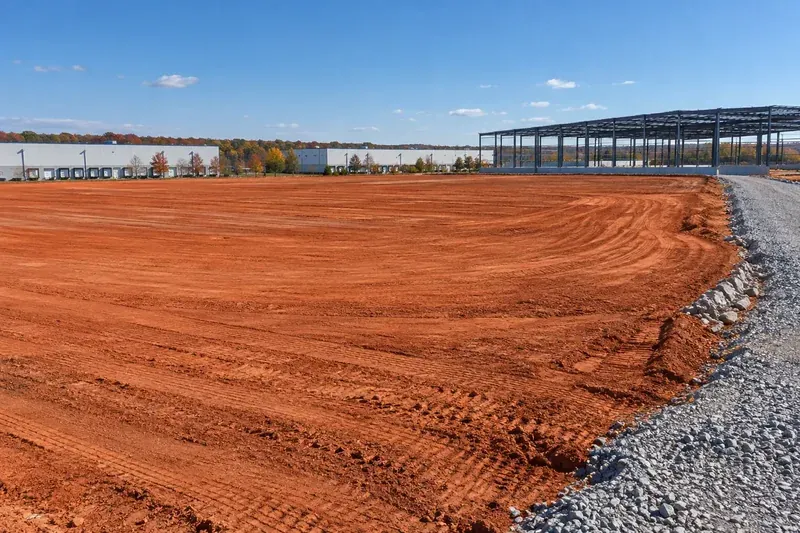
Buford's own growth numbers tell the story: since 2019, roughly 534 acres inside the city converted to industrial use against about 46 acres of residential, close to nine of every ten acres. That's big building pads, truck courts and detention basins sized for logistics traffic rather than driveway grading.
We run the same GPS-guided dozer work and independent compaction testing on a five-acre industrial pad that we do on a homesite, scaled to the equipment the job calls for.
BEFORE THE WORK STARTS
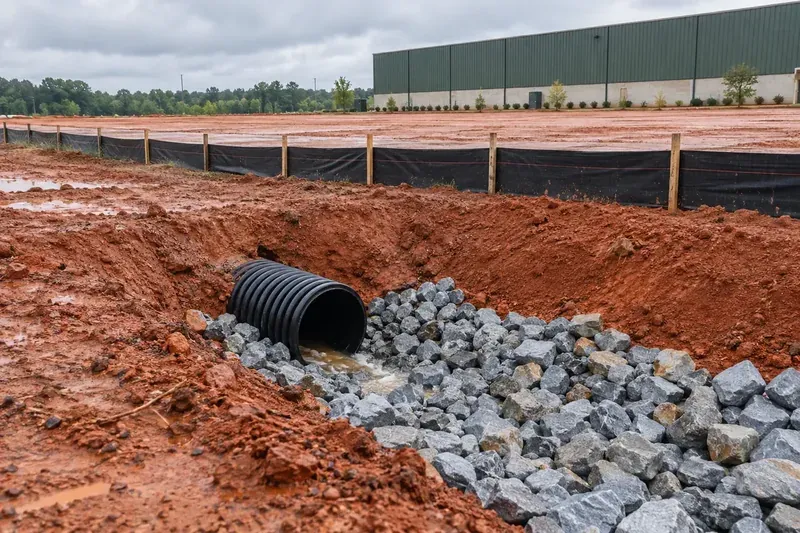
Buford sits on the same Piedmont red clay as the rest of the territory, mostly well-drained Cecil and Pacolet soil with bedrock sitting more than 60 inches down, so rock stays out of the way here. Pacolet and Cecil both carry an erodibility factor near the top of the local range, and Pacolet's own soil survey describes slopes running as steep as 25 percent in places.
Strip the cover on a slope like that and it moves fast, which is why our erosion control plan gets built before clearing starts, ahead of the first rain rather than in response to it.
PLAN THE WHOLE JOB
Land clearing runs by the acre once we've walked it. Burning what comes down starts at $10,000 per acre; grinding with the mulch left on site runs about $13,500 per acre, or about $16,000 per acre if we haul the chips off. Industrial pad jobs price separately once we know the acreage, the cut and fill, and which county's buffer and tree rules apply.
From $10,000 / acre
Clearing with on-site burning, where permitted.
About $13,500 / acre
Grinding with the mulch remaining on the property.
About $16,000 / acre
Grinding with the chips removed from the site.
GWINNETT & HALL COUNTIES, GEORGIA
Tell us where your Buford-area project is and what you’re planning. We’ll work through the land clearing & grading scope with you.
We confirm the jurisdiction and the conditions that apply to your property before finalizing the work.
Start with the property and what you want to do. We’ll help you work through the details.
GO STRAIGHT TO THE SOURCE
Send your Buford site address and plans so we can confirm the jurisdiction and scope the clearing, grading and erosion control.