


Selective clearing
We take out what blocks the build and leave the trees you want standing. You mark the keepers with us before anything starts.
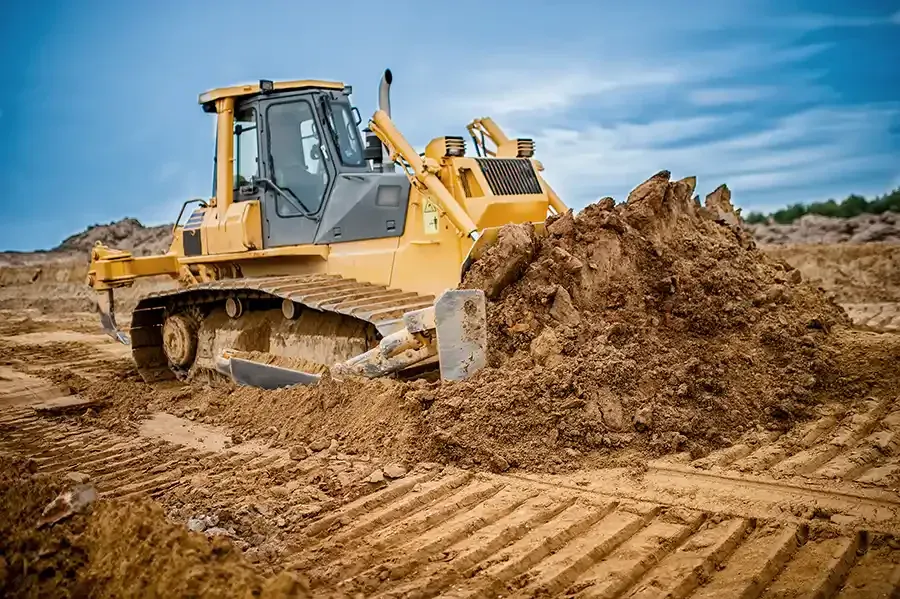
SITEWORK ACROSS NORTH GEORGIA
We clear the site and shape the grade so the trades coming after you have ground that holds.
GROUND THAT IS READY
Land clearing is the part of a project nobody sees once the concrete goes down, and the part everyone feels if it was rushed. We clear what has to come out, leave what you want kept, and shape the ground so water leaves the site the way it should.
We self-perform every piece of site work ourselves, from clearing through grading, utilities, concrete and paving. One crew, one contract, and the same company that cleared your lot is the one that builds on it.
You get one point of contact from the first walk of the property through final grade, which means the person who bid it is the person who answers when you call about it.
A COMPLETE START
We take out what blocks the build and leave the trees you want standing. You mark the keepers with us before anything starts.

A dozer with a root rake pulls stumps and roots out to 8 to 12 inches into the subsoil, the same depth commercial jobs require.

Cut and fill to the elevations on your plan, compacted in lifts, so the pad is ready for footings and the surveyor can shoot it.

Grade, crown and base the drive so it sheds water and stays passable for the concrete trucks and the framing crew.

Swales, berms and finish contours that move water off the pad and away from where it would stand.

Silt fence, construction exits, inlet protection and matting installed and maintained to the plan the county approved.
A PLAN FOR THE DETAILS
A lot of clearing quotes just mean someone will knock the trees down and pile the debris. Ours means the ground is ready to build on.
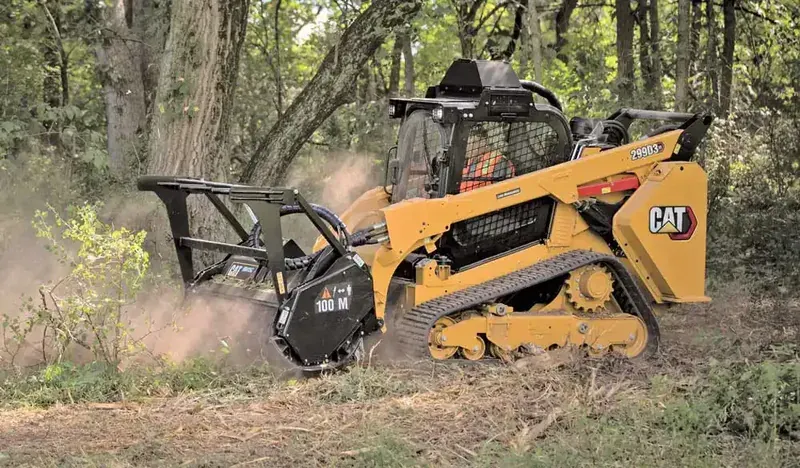
We bring a dozer with a root rake, not a skid steer, so roots come out to 8 to 12 inches into the subsoil instead of rotting and settling under a future slab.
We run a roller for real compaction on the lifts we place, and we recommend an independent compaction test before anything gets built on top, the same standard we hold to on commercial sites.
Since the same crew handles your grading and paving after we clear, we make calls a single-trade clearing company can't, like stockpiling material on a spot you're about to grade anyway.
KNOW WHAT'S UNDERNEATH
The red clay here gets blamed for a lot, but water, slope, soil conditions, and poorly placed fill all deserve a closer look. We plan the work around the actual site and recommend independent testing where the build calls for it.
The material underneath it is the part that bites. Cut deep enough and you are into saprolite, weathered rock that washes several times faster than the clay above it, on ground where slope is already working against you.
Depth to rock swings hard over short distances too. On the same parcel you can have sixty inches of soil on the ridge and fifteen inches over rock on the side slope, which is the difference between a straightforward cut and a day with a hammer.
A PLAN FOR THE DETAILS
The rules change at every county line in our territory. Our minimum clearing job is one acre, and we walk you through the permits and approvals required before work starts.
An acre or more of disturbance needs a land disturbance permit and a Notice of Intent with Georgia EPD. Several counties trigger under an acre, and your driveway usually counts toward it.
Georgia generally requires a 25-foot undisturbed buffer along protected state waters and 50 feet along designated trout waters. We check the applicable stream classification and any wider local requirements for the parcel.
Local rules may add to the state minimum, and water supply watersheds can carry additional buffers and setbacks. We check the parcel before we quote it.
ONE CREW. A CLEAR SEQUENCE.
 STEP 01
We meet you on site, look at the slope, the water and the trees you want kept, and find out what has to be ready and when.
 STEP 02
You get a written scope that says what comes out, what stays, where the dirt goes and what the permit costs.
 STEP 03
We file the land disturbance permit, then install silt fence and the construction exit before the first tree comes down.
STEP 04We clear selectively, then pull the stumps and roots out of the building envelope and the drive with a root rake.
 STEP 05
We grade to your elevations in compacted lifts, shape the drainage and hold the slopes.
 STEP 06
We finish the grade, leave the erosion control standing for the next trade, and walk it with you.
STRAIGHT ANSWERS
Start with the property and what you want to do. We'll help you work through the details.
ASK ABOUT YOUR PROJECTSend the property address and your building plans so we can scope the clearing, grading and site preparation.